Pipettes and Persistence: The Rogue Scientists Brewing Tomorrow's Cures in Their Garages
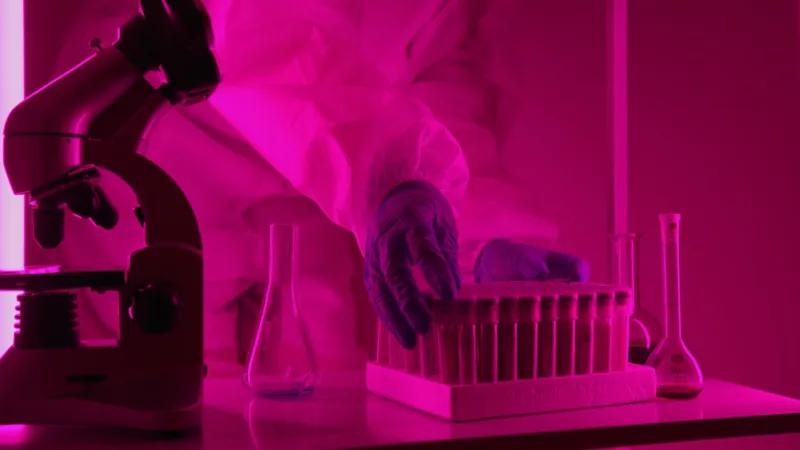
The centrifuge in Josh Malone's garage cost him $400 on eBay. The PCR machine next to it came from a university equipment auction in 2021. The shelving unit holding his reagents was assembled from IKEA parts on a Sunday afternoon. What's sitting on those shelves, though — that's where things get complicated.
Malone, a former pharmaceutical research associate from the Research Triangle in North Carolina, left his corporate job in 2020 after watching his company quietly shelve a promising compound for a rare metabolic disorder. The math wasn't there, he was told. Too small a patient population. Not enough margin. He went home, ordered a whiteboard, and started over.
"There are about 300 million people worldwide living with a rare disease," Malone says, scribbling a structure on that same whiteboard. "In America, we call something rare if it affects fewer than 200,000 people. But 7,000 rare diseases times 200,000 people is not a small number. It's just small per disease. And that's the gap I'm working in."
Malone is part of a loose, decentralized, and rapidly expanding movement that's been quietly reshaping the edges of biomedical research. Call them biohackers, garage scientists, or DIY biologists — the labels vary, but the mission is consistent: pursue the science that the profit motive won't.
The Orphan Drug Problem Nobody Talks About
The pharmaceutical industry will tell you that drug development is expensive, risky, and slow. All of that is true. The average cost to bring a drug from discovery to market is estimated at over $2 billion when you factor in failures. Given those economics, companies rationally concentrate resources on conditions with large, insured patient populations — chronic diseases, lifestyle conditions, the kinds of diagnoses that generate lifetime prescriptions.
The Orphan Drug Act of 1983 was Congress's attempt to fix this by offering tax incentives and market exclusivity to companies willing to develop treatments for rare diseases. It helped. But the incentives have also been gamed extensively — companies have learned to slice disease definitions narrowly to qualify for orphan status on drugs that were never really niche. Meanwhile, thousands of genuinely rare conditions remain without any approved treatment at all.
That's the vacuum the garage scientists are stepping into.
Community Labs and Converted Kitchens
The infrastructure supporting DIY biotech has matured considerably in the past decade. Community biology labs — sometimes called biohacker spaces — now operate in most major American cities. Genspace in Brooklyn, BioCurious in Silicon Valley, and Biotech Without Borders in New York offer bench access, shared equipment, and crucially, community. For researchers who've left academia or industry, these spaces provide the social and intellectual scaffolding that a solo garage setup can't.
Equipment costs have also plummeted. CRISPR gene-editing kits that would have required a fully equipped molecular biology lab fifteen years ago can now be ordered online for a few hundred dollars. Benchtop DNA synthesizers. Portable spectrometers. Microfluidic chips. The democratization of laboratory hardware has been as transformative for biology as cheap cloud computing was for software startups.
"The barrier used to be equipment," says Dr. Tanya Osei, a molecular biologist who left a position at a Boston biotech firm to run a community lab in Detroit. "Now the barrier is knowledge, creativity, and time. Which means the field is open to a completely different kind of person."
That different kind of person often includes parents. Some of the most driven DIY researchers aren't scientists by training — they're people whose children have been diagnosed with conditions so rare that no pharmaceutical company has a pipeline entry for them. The patient advocacy group model has existed for decades, but what's new is that some of these parents are now moving beyond fundraising and actually running experiments.
The Gray Zone: Legal, Ethical, and Otherwise
Here's where the story gets genuinely complicated. The FDA regulates biological research with a fairly broad brush, and the line between "research" and "treatment" is one that DIY scientists navigate with varying degrees of care.
Self-experimentation has a long history in medicine — researchers have infected themselves with pathogens, swallowed experimental compounds, and injected unproven substances in the name of science. The DIY biotech community sits somewhere in that tradition, though the ethical terrain is contested. Experimenting on yourself is one thing. Providing experimental treatments to others — even desperate patients with no other options — crosses into territory that can attract serious federal attention.
In 2019, the FDA sent warning letters to several companies selling DIY CRISPR kits marketed for human use. In 2023, a California man was indicted for distributing an unlicensed herpes treatment developed in a home lab. The regulatory apparatus is watching, even if it's not always moving quickly.
The community itself is divided on where the lines should be. Many DIY biologists are emphatic that human experimentation without clinical oversight is reckless, regardless of intent. Others argue that informed consent and radical transparency should be sufficient — that adults with terminal or debilitating conditions have the right to try anything they choose.
"I'm not anti-regulation," Malone says carefully. "I'm anti-unnecessary delay. There's a difference between protecting people and just protecting the existing business model."
What Decentralized Biology Could Actually Become
Beyond the legal debates, there's a bigger question worth sitting with: could DIY biotech genuinely change how medicine is developed in America?
There are reasons to think yes. The open-source software movement transformed the technology industry by distributing the labor of innovation across a global community of contributors. Open-source biology — sharing protocols, data, and findings freely rather than locking them behind patents — could, in theory, accelerate rare disease research in ways that centralized, profit-driven institutions structurally cannot.
Some serious money is starting to pay attention. A handful of impact investors and philanthropic foundations have begun funding community labs and independent researchers specifically because of their structural freedom to pursue low-commercial-value science. It's not venture capital at scale, but it's a signal.
The next world of medicine might not be built entirely in gleaming corporate campuses in Cambridge or San Diego. Some of it might come from a garage in North Carolina, a community lab in Detroit, or a converted kitchen in Portland — places where the driving motivation isn't a return on investment but something older and more stubborn.
The desire to fix what's broken, whether or not anyone's going to pay you for it.
Malone's centrifuge hums as he talks. He's three years into work on that abandoned metabolic compound. No investors. No clinical team. Just the whiteboard, the eBay equipment, and the file his old company left behind.
"I'm not trying to disrupt pharma," he says. "I'm just trying to finish what they started."