Somebody Patented Your REM Cycle: The Corporate Land Grab Happening While You Sleep
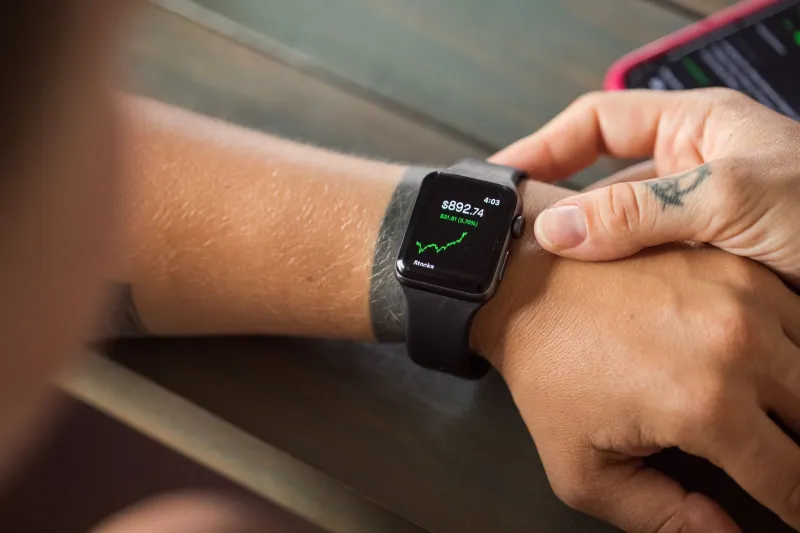
You strap on your smartwatch, set your white noise machine, and drift off. Eight hours later, you wake up to a sleep score, a breakdown of your deep sleep cycles, and maybe a nudge to go to bed thirty minutes earlier tomorrow. It feels helpful. It feels personal. What it also feels like — though nobody in the industry is rushing to advertise this — is a data harvest of extraordinary intimacy.
While Americans have been obsessing over screen time and blue light glasses, something quieter and arguably more consequential has been unfolding in patent offices across the country. The biological experience of sleep — one of the most fundamental human processes — is becoming contested intellectual property. And the players staking their claims aren't small.
The Patent Pile-Up Nobody's Talking About
Search the US Patent and Trademark Office database for filings related to sleep stages, sleep optimization algorithms, or dream-state biometrics and you'll find a landscape that has transformed dramatically in the past five years. Apple, Google, Amazon, Samsung, and a constellation of venture-backed sleep tech startups have collectively filed hundreds of patents touching on how sleep data is captured, interpreted, and acted upon.
Some of these patents are relatively benign — proprietary sensor designs, novel hardware configurations. But a growing number venture into territory that should raise eyebrows. Companies are now patenting specific methods for identifying sleep stages from wrist-based sensors, algorithms that correlate heart rate variability with dream activity, and — perhaps most provocatively — personalized intervention systems that use your historical sleep data to recommend behavioral or pharmacological adjustments.
That last category is where the pharmaceutical industry enters the picture. Major pharma players, sensing that sleep medicine is on the verge of a data-driven revolution, have been quietly acquiring or partnering with sleep tech firms. The play isn't hard to read: if you can patent the method by which a person's sleep data informs the prescription of a sleep aid, you've created a proprietary pipeline from wrist sensor to medicine cabinet.
What "Owning" a Sleep Algorithm Actually Means
Here's where it gets thorny. When a company patents a method for analyzing sleep architecture — the sequence and duration of light sleep, deep sleep, and REM cycles — they don't technically own your data. But they do own the process by which that data becomes meaningful. That's a subtle but significant distinction.
Think of it this way: your raw biometric readings are like unrefined ore. The patented algorithm is the smelter. Right now, most consumers hand their ore directly to the smelter without a second thought, because the output — a tidy sleep score on a glowing app screen — feels like a gift. The catch is that the smelter's owners can license their process, restrict competitors from building similar tools, and potentially charge downstream for access to insights derived from your own body.
Sleep researchers who study this space point out that the commodification pressure is compounding fast. As wearables get more sophisticated — tracking not just movement but skin temperature, blood oxygen, galvanic skin response, and eventually neural signals — the granularity of sleep data will explode. Each new data stream creates fresh patent opportunities. Each patent creates a new moat.
The Startup Angle: Racing to Stake Claims Before the Giants Close the Door
For sleep-focused startups, the current moment feels like a land rush. Companies like Oura, Whoop, and a raft of less-publicized challengers are filing aggressively, trying to establish defensible IP positions before Apple or Google absorbs the entire space.
Some founders in this world are candid about the dynamic. The goal, as one sleep tech investor described it in a recent industry panel, is to become either an acquirer or an acquisition target before the window closes. That means building a patent portfolio that either protects your market position or makes you attractive enough to get bought out at a premium.
The consumer sits at the end of this chain, largely unaware. When you agree to a sleep app's terms of service — and virtually everyone does, without reading them — you're typically granting broad rights to your biometric data for purposes that include research, product development, and in some cases, sharing with third-party partners. The patents these companies are building are, in a very real sense, constructed on the foundation of data you provided for free.
Dream States as a New Frontier
If sleep-stage tracking sounds clinical, the emerging work around dream-state detection sounds genuinely surreal. Several research-backed startups are exploring whether REM-phase biometrics — the elevated heart rate, the distinctive eye movements, the particular brain wave signatures — can be reliably detected from consumer wearables and used as a proxy for dream activity.
The applications being explored range from the therapeutic (using dream-phase detection to time the delivery of audio cues for lucid dreaming or trauma processing) to the deeply commercial (understanding emotional states during dreams to infer psychological profiles). There are already provisional patents in this space. Whether they hold up to legal scrutiny is almost secondary — the intent to own this territory is clear.
Neuroscientists are skeptical that consumer hardware can meaningfully decode dream content anytime soon. But that hasn't dampened the filing activity. In the patent game, staking out a method claim early — even before the technology fully matures — is a well-established competitive strategy.
Who's Protecting the Sleeper?
The regulatory picture here is genuinely murky. Sleep biometric data occupies an ambiguous space: it's health-adjacent but not always classified as protected health information under HIPAA, particularly when collected by consumer devices rather than clinical ones. That gap has given companies considerable latitude.
A handful of state-level privacy laws — California's CPRA being the most robust — offer some protections around biometric data. But enforcement is inconsistent, and the specific question of patented sleep-optimization methods hasn't yet attracted serious legislative attention.
Some consumer advocates argue that the time to draw lines is now, before the ecosystem calcifies. The precedent set by genomics — where a slow regulatory response allowed companies to build massive proprietary databases of genetic information before meaningful guardrails existed — looms large as a cautionary tale.
The Bed You've Already Made
None of this means you should throw your fitness tracker into the ocean. Sleep tracking genuinely helps a lot of people, and the technology will only get more useful. But there's a version of the next decade where the insights derived from your nightly biometrics are locked behind licensing agreements, where your sleep score is calculated by an algorithm you can't audit, and where the most intimate data your body generates every night feeds a commercial ecosystem you never consciously opted into.
The sleep patent wars aren't loud. They're happening in filing rooms and law offices and startup board meetings, largely invisible to the people whose biology is at the center of the dispute. That quietness is, in its own way, the whole point. By the time this fight becomes a headline, the claims will already be staked.
Somebody is betting big on owning the science of your sleep. The only question is whether you'll be paying them rent on your own rest for decades to come.