Ten Lab Experiments That Will Be Boring by 2035

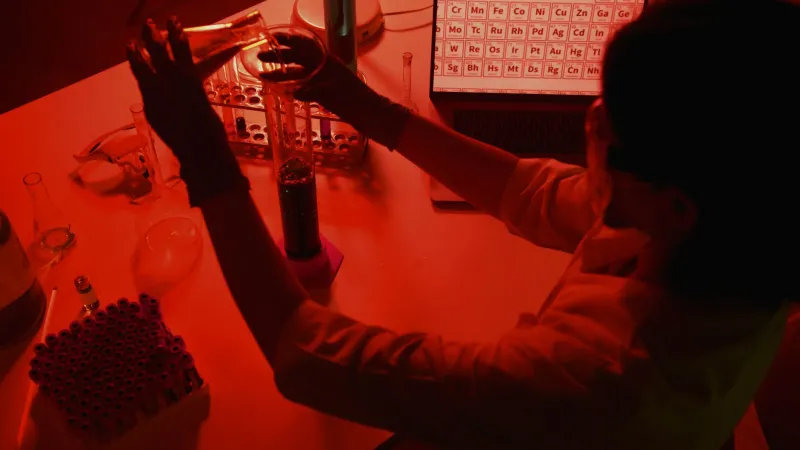
Photo: Adam Cuerden, Public domain, via Wikimedia Commons
In 1995, the internet was a weird thing your cousin explained at Thanksgiving. By 2015, a four-year-old could operate it before learning to tie shoes.
That's the pattern: transformative technology doesn't arrive with fanfare. It arrives, gets weird, gets cheap, and then disappears into the background so completely that we forget it was ever strange. The smartphone didn't feel like the future — it felt like a phone that did too much, until one day it was just where life happened.
So let's skip ahead. Here are ten things currently confined to lab benches, patent filings, and seed-stage pitch decks that will feel utterly mundane by 2035.
1. Solid-State Batteries
Now: Swappable lithium plates tested in Toyota and QuantumScape pilot lines, promising double the energy density and no fires. 2035: The reason your EV charges in eight minutes and your kid's e-bike doesn't make the news. Nobody will call it solid-state. It'll just be a battery.
2. Lab-Grown Organs
Now: Bioprinted liver tissue used for drug testing; companies like United Therapeutics printing human lungs that have already been transplanted in early trials. 2035: The transplant waitlist becomes a scheduling problem. "Printed kidney" will carry the same emotional weight as "filling."
3. Cultivated Meat
Now: FDA-approved chicken from UPSIDE Foods and GOOD Meat, sold at a premium in a handful of restaurants. 2035: A blended product in the frozen aisle at Kroger, priced like the real thing, indistinguishable in a taco.
4. Ambient AI Doctors
Now: AI scribes listening to appointments and drafting notes; diagnostic models outperforming radiologists on narrow tasks. 2035: The annual physical happens at home, continuously, invisibly. Your watch catches the arrhythmia; the appointment is with an algorithm that escalates to a human when it matters.
5. Autonomous Trucking
Now: Driverless freight running fixed routes in Texas by Aurora and Kodiak, with a human in the passenger seat "just in case." 2035: The just-in-case human is gone on the I-45 corridor, and nobody under thirty finds it remarkable that goods moved themselves overnight.
6. Grid Batteries in Your Basement
Now: Home backup systems like the Tesla Powerwall, a luxury purchase for the solar-adjacent. 2035: Standard equipment, like a water heater — and during heat waves, your basement quietly sells power back to the grid for credit.
7. Protein Design
Now: DeepMind's AlphaFold cracked protein structures; startups design new molecules on computers before touching a pipette. 2035: New enzymes, medicines, and materials are "written" the way software is. The phrase "we discovered it" sounds as dated as "we dialed in."
8. Vertical Farming's Second Act
Now: A graveyard of overfunded lettuce startups that couldn't beat the economics of sunlight. 2035: Not lettuce — pharmaceuticals. Precision-fermented proteins and medicines grown in repurposed warehouses, where the margins finally work.
9. Robot Deliveries
Now: Sidewalk robots from Starship and drone pilots in a dozen suburbs, tolerated mostly as a novelty. 2035: The sidewalk bot is how the pharmacy reaches your grandmother. Nobody films it anymore.
10. Direct Air Capture
Now: Enormous fans in Texas and Iceland scrubbing CO2 at hundreds of dollars per ton, subsidized by tax credits and corporate guilt. 2035: A boring industrial category, like wastewater treatment — a thing municipalities buy, not a thing billionaires debate.
The Pattern Behind the Pattern
Notice what these have in common: none of them will feel like a revolution in 2035. There will be no single moment where lab-grown organs "arrive." Instead, each will cross the same invisible line — from technology people argue about to infrastructure people complain about.
That's how you know something has truly won. Nobody writes think pieces about the elevator anymore. But for a century, it's been quietly reshaping which buildings we live in and which neighborhoods we can afford.
The weird lab stuff of 2025 is the plumbing of 2035. The only question is which of these ten makes it across the line first — and which one we're still writing skeptical articles about a decade from now.