Mammoth Ambitions: The Biotech Startups Betting Billions on Bringing Back the Dead
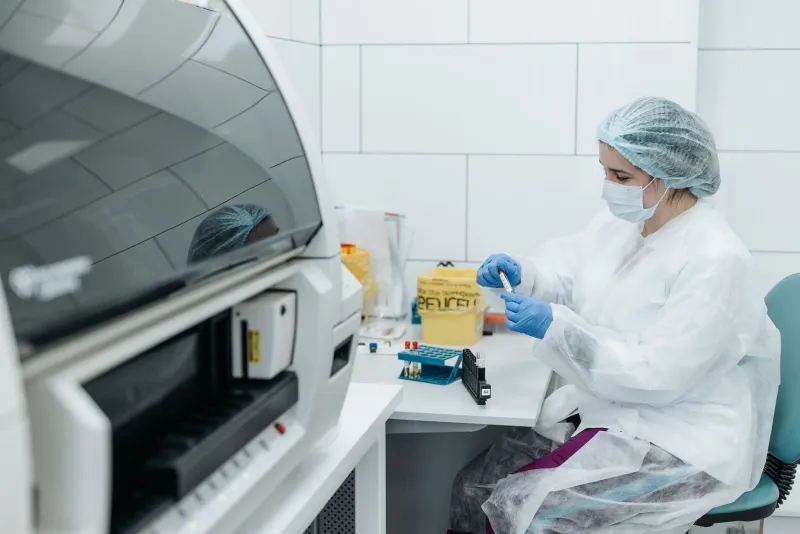
Somewhere in a Dallas laboratory, a team of geneticists is editing elephant DNA, splicing in cold-weather adaptations copied from a creature that died out roughly four thousand years ago. The goal, as their employer Colossal Biosciences has told anyone willing to listen, is to walk a living, breathing woolly mammoth across the Siberian tundra within the decade.
It is, depending on who you ask, either the most audacious conservation play in human history or the most expensive science fiction project Silicon Valley has ever bankrolled.
Colossal isn't alone. Revive & Restore has been quietly plugging away at the passenger pigeon for years. Australian startup Colossal's sister effort is eyeing the Tasmanian tiger. And a growing constellation of smaller biotech players are circling everything from the dodo to the dire wolf, armed with CRISPR toolkits and venture capital that would have seemed fantastical a decade ago.
The question nobody in the pitch meetings seems to be asking loudly enough: what actually happens if this works?
The Science Is Real. The Timeline Probably Isn't.
Let's be clear about one thing — the underlying technology is genuinely impressive. CRISPR-Cas9 gene editing has matured dramatically since its early, clunky iterations. Scientists can now make hundreds of targeted edits to a genome with a precision that would have seemed like magic in the 2000s. Ancient DNA extraction has similarly leapt forward, with researchers pulling usable genetic sequences from permafrost-preserved specimens that are tens of thousands of years old.
But there's a canyon-sized gap between editing elephant cells in a petri dish and producing a viable mammoth calf.
The mammoth genome contains roughly 3.2 billion base pairs. Colossal has publicly identified around 60 key genes it wants to introduce into the Asian elephant genome — traits like cold-adapted hemoglobin, subcutaneous fat storage, and that signature shaggy coat. Sixty edits sounds manageable until you start appreciating how gene expression actually works. Genes don't operate in isolation. They interact, suppress, amplify, and contradict each other in ways that even the best computational models struggle to predict.
"The editing part is almost the easy bit," says one conservation geneticist who asked not to be named because her institution has funding ties to one of the players involved. "Getting a healthy, reproductively viable animal that can actually survive in the wild — that's where the biology gets genuinely hard."
Then there's the gestation problem. Asian elephants carry calves for 22 months. Nobody has successfully created an artificial uterus capable of supporting elephant development. Colossal has said it's working on ectogenesis technology, but the company has been characteristically vague about how far along that research actually is.
The Money Trail Tells a Different Story
Colossal has raised over $225 million to date, drawing checks from investors including Thomas Tull, the film producer behind The Dark Knight trilogy, and a roster of venture funds that smell a story worth telling. And that's the thing — de-extinction is extraordinarily good at generating press.
When Colossal announced its mammoth project in 2021, the coverage was wall-to-wall. When it added the Tasmanian tiger to its portfolio in 2022, the cycle repeated. Every new species announcement functions like a product launch, complete with dramatic renders of resurrected megafauna wandering pristine wilderness.
Some conservation scientists are openly frustrated. "Every dollar going into de-extinction is a dollar not going into protecting the 40,000 species currently on the IUCN Red List," argues one ecologist at a major US university. "We're letting real animals go extinct to fund the fantasy of bringing back ones that have already gone."
The de-extinction companies push back hard on this framing. They argue their work generates platform technologies — gene editing tools, reproductive science, genomic databases — that have downstream value for conventional conservation. Colossal specifically points to work it's doing with the endangered African elephant as evidence that mammoth research has living-world applications.
That argument has merit, but it also conveniently sidesteps the question of whether the headline product will ever actually exist.
The Ecosystem Nobody Is Talking About
Even setting aside the scientific hurdles, there's a fundamental ecological problem baked into de-extinction that rarely makes it into the press releases.
Species don't exist in isolation. They exist inside ecosystems — intricate webs of predator-prey relationships, plant communities, soil microbiomes, and climate conditions that evolved over millennia. The woolly mammoth didn't just wander around looking majestic. It was a keystone species that shaped the Pleistocene steppe through grazing patterns, dung distribution, and ice compaction. That ecosystem no longer exists.
Colossal's answer to this is the "Pleistocene Park" concept, pioneered by Russian ecologist Sergey Zimov, which proposes rewilding large sections of Siberia to recreate grassland conditions that could theoretically support resurrected megafauna. It's a fascinating idea. It's also a geopolitical and logistical undertaking that dwarfs anything the biotech sector has ever attempted.
The passenger pigeon problem is equally thorny. The species once darkened American skies in flocks numbering in the billions. Its extinction was driven by industrial-scale hunting and habitat destruction. Revive & Restore's plan involves creating birds with passenger pigeon traits using band-tailed pigeon genetics. But a handful of lab-produced birds released into a fragmented, urbanized Eastern forest is not the same ecological force as a flock of three billion. The numbers matter as much as the DNA.
So Why Does Any of This Matter?
Here's the thing about de-extinction that the skeptics sometimes miss: the technology being developed along the way is real and valuable regardless of whether a mammoth ever sets foot on the tundra.
Colossal's work on multiplex gene editing — the ability to make many precise edits simultaneously — has genuine applications in human medicine, agriculture, and standard conservation genetics. Its investment in artificial reproductive technologies could eventually help species like the northern white rhino, which is functionally extinct at two surviving individuals. The genomic tools being built to reconstruct ancient species are the same tools that help scientists understand the genetic vulnerabilities of living ones.
There's also a harder-to-quantify cultural argument. Humans respond to charismatic megafauna in ways that abstract conservation statistics simply cannot replicate. If the possibility of seeing a living mammoth — even a proxy mammoth, even in a controlled reserve — gets a generation of Americans emotionally invested in genetic science and wildlife preservation, that's not nothing.
But investors deserve honesty about what they're actually funding. And the public deserves a clearer-eyed conversation about what de-extinction can realistically deliver, on what timeline, and at what opportunity cost.
The Verdict Isn't In Yet
De-extinction sits in that peculiar zone where the science is advanced enough to be credible, the ambition is large enough to attract serious money, and the finish line is just far enough away that nobody can be definitively proven wrong.
Colossal's founders are smart people working on real problems. So are the teams at Revive & Restore and their counterparts worldwide. The technology they're building will matter. Whether the woolly mammoth itself ever matters — whether it walks, breathes, and reshapes an ecosystem the way its ancestors did — is a question that a decade of CRISPR editing and nine-figure funding rounds has not yet answered.
In the meantime, the pitch decks will keep getting better. The renders will keep getting more convincing. And somewhere in Dallas, the cells keep dividing.
What comes next is anyone's guess. But in this industry, uncertainty has never stopped anyone from writing a very large check.