When Life Becomes the Factory: Synthetic Biology's Quiet Bet on Abundance for Everyone
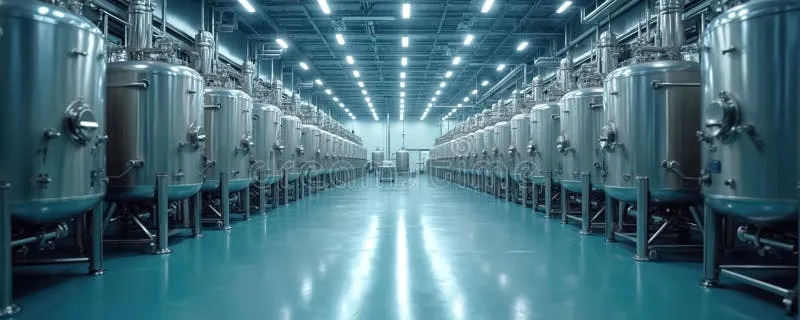
Somewhere in a nondescript building outside of Boston, a vat of genetically engineered yeast is doing something yeast has never done in four billion years of evolution: producing a compound that used to require harvesting thousands of pounds of rare tree bark. The yeast doesn't know that. It just follows its new instructions, divides, and keeps making the thing.
That's the core premise of synthetic biology, and it's weirder and more consequential than most people realize. We're not talking about tweaking crops for drought resistance or brewing better beer — though those are part of the story. We're talking about fundamentally reprogramming living organisms to serve as manufacturing infrastructure. Organisms as factories. Biology as supply chain.
And a growing number of founders, investors, and researchers believe this shift could eventually untangle some of the deepest knots in the global economy.
The Old Scarcity Problem, Reframed
For most of human history, what you could make was limited by what you could find, mine, or grow. Rare earths power your phone but require destructive extraction. Certain medicines depend on compounds found only in remote ecosystems. Traditional manufacturing chugs through petroleum, water, and labor in quantities that make even the most optimistic climate projections nervous.
Synthetic biology's pitch is deceptively simple: what if you could grow what you need instead?
Ginkgo Bioworks, one of the sector's most prominent players, has spent years building what it calls a "biological foundry" — essentially a platform for programming cells the way software engineers write code. Their clients range from food companies trying to replace artificial flavors to defense contractors exploring biosensors. The underlying logic is always the same: design the genetic sequence, insert it into a host organism, scale the fermentation, collect the output.
It sounds straightforward. It is not straightforward.
"People hear 'program a cell' and they think it's like writing an app," says one synthetic biology founder who asked not to be named ahead of a funding round. "But the cell has its own agenda. It wants to survive. It doesn't care about your product. Getting it to reliably make what you want, at scale, without reverting — that's the hard part nobody talks about at conferences."
The Economics of Engineered Life
When synthetic biology does work, the economics can be genuinely disruptive. Amyris spent years struggling to produce artemisinin — a malaria drug traditionally derived from a plant — via engineered yeast. The process eventually worked, driving down costs and improving supply reliability for a medication that millions of people in the developing world depend on. That's not a small thing.
More recently, companies like Bolt Threads and Modern Meadow have demonstrated that materials once dependent on animal agriculture or petroleum chemistry — silk, leather-like textiles — can be produced biologically. Bolt Threads' Mylo, made from mycelium, has shown up in products from Stella McCartney and Lululemon. The volumes are still modest. The direction of travel is not.
In the food sector, precision fermentation companies are producing dairy proteins, fats, and flavor compounds without a single cow in the picture. Perfect Day's whey protein, made by engineered fungi, is already in consumer products on US shelves. Remilk, an Israeli startup with US operations, is building what it claims will be the world's largest precision fermentation facility.
The underlying economic argument is compelling: if you can decouple production from land, weather, and extractive supply chains, you potentially compress the cost curves for entire categories of goods. Not overnight. But over decades, in ways that could reshape what's considered scarce.
What a Post-Scarcity Future Actually Looks Like
Let's be honest about the phrase "post-scarcity" — it's doing a lot of work here, and it deserves some skepticism.
True post-scarcity, in the utopian sense, isn't really what synthetic biology delivers. What it delivers is different scarcity. You still need fermentation capacity, energy to run bioreactors, feedstocks for the organisms, and a regulatory environment that allows you to operate. Swap oil dependency for sugar dependency and you've changed the problem, not eliminated it.
But that reframing still matters. Sugar is renewable. Fermentation can be distributed. A bioreactor in rural Kansas could theoretically produce the same compound as one in Shanghai, without the shipping container and the geopolitical exposure.
"The thing that excites me isn't abundance in some abstract sense," says Nili Gilbert, a climate-focused investor who has tracked the sector closely. "It's resilience. Local production. Supply chains that don't snap when a port closes or a political relationship sours."
That framing resonates particularly in the post-COVID moment, when Americans watched supply chains for everything from semiconductors to baby formula buckle in real time. Biological manufacturing, in theory, offers a path toward production that's more distributed, more adaptable, and less dependent on global logistics networks that turned out to be fragile.
The Risks Nobody Wants to Lead With
Here's where the story gets complicated, because synthetic biology's boosters sometimes gloss over the parts that keep biosafety researchers up at night.
Engineered organisms don't always stay where you put them. Containment is a real and ongoing challenge — not in a science-fiction, monster-escapes-the-lab sense, but in quieter, more mundane ways. Horizontal gene transfer, evolutionary pressure, contamination events. The history of biotechnology includes enough cautionary tales to warrant genuine humility.
There's also the question of who benefits. If a handful of well-capitalized synthetic biology platforms control the genetic blueprints for producing critical medicines or materials, have we actually solved scarcity — or just moved the chokepoint? Open-source biology movements exist precisely to push back against this dynamic, but they're fighting uphill against IP regimes designed for an earlier era of innovation.
And then there's the regulatory patchwork. The FDA, USDA, and EPA share jurisdiction over different categories of biotech products in ways that can make bringing something to market feel like navigating three different countries simultaneously. That's not inherently bad — oversight of engineered life probably should be thorough — but it creates timelines and costs that favor large incumbents over scrappy startups.
The Long Game
Synthetic biology is not a story about next quarter. The founders who are most honest about it will tell you they're playing a decades-long game, building infrastructure that may not fully mature until the 2040s or beyond.
But the infrastructure is being built right now. Bioreactor capacity is scaling. The cost of DNA synthesis has dropped by orders of magnitude over the past fifteen years, following a curve that looks uncomfortably like early semiconductor economics. The tools for designing genetic circuits are getting better, faster, and more accessible.
The organisms in those Boston-area vats don't know any of this, of course. They just divide and follow their instructions. But the instructions are getting more sophisticated every year — and the things those organisms are being asked to make are getting more valuable.
Whether that adds up to genuine abundance or just a more complicated version of the resource constraints we've always lived with is the question that will define the next several decades of this industry. Either way, it's probably the most important manufacturing story most Americans aren't paying attention to.