The Grid Learned to Predict Its Own Death: Meet the Startups Rewiring America Before the Next Blackout
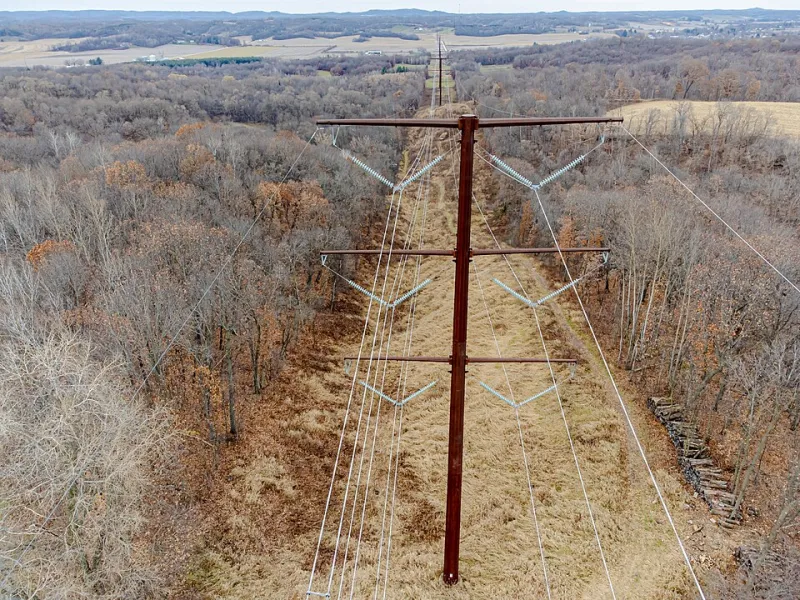
Photo: Wikideas1, CC0, via Wikimedia Commons
Somewhere in Texas right now, a transformer is running hot. Nobody knows which one. That's the problem.
The US power grid is the largest machine ever built by humans — roughly 160,000 miles of high-voltage transmission lines strung across a continent — and most of it was designed in an era when the biggest threat to reliability was a squirrel. Today it's ice storms in Houston, heat domes in Phoenix, wildfires in Paradise, and a million rooftop solar installations pushing power in directions the original engineers never imagined.
The grid doesn't fail because it's old. It fails because it's blind.
The Machine That Can't See Itself
Here's the uncomfortable truth utilities don't put in their glossy annual reports: when a storm knocks out power, many utilities don't know exactly where the fault is until customers call to complain. Crews are dispatched based on outage maps that aggregate reports, then they drive around looking for the problem.
A handful of startups think that's insane, and they're right.
Companies like LineVision are bolting sensors onto transmission lines themselves, turning dumb steel into data. Their platforms listen to how much a line sags in the wind, how hot it's running, how close vegetation has grown — real-time telemetry from infrastructure that, until recently, reported nothing at all. The result is something utilities call dynamic line rating: discovering that a line rated for 4,000 amps can safely carry 5,200 on a cool, windy day. That's free capacity, found with software.
Meanwhile, companies like Gridware are building what amount to security cameras for power lines — pole-mounted sensors that detect a falling branch, a swaying wire, or the vibration signature of a failing component, often minutes before it becomes an outage or a spark.
Self-Healing Isn't a Metaphor Anymore
The dream scenario sounds like science fiction: a grid that senses a fault, reroutes power around it, and heals the break before a single customer notices. Parts of that future already exist. Self-healing distribution systems in Florida and the Carolinas — where hurricane seasons have made resilience a survival issue rather than a buzzword — can isolate a downed line and restore power to unaffected neighborhoods in under a minute.
What's changing now is intelligence. AI systems trained on decades of outage data, weather models, and sensor feeds are starting to do predictive maintenance the way your phone predicts your next word: the transformer on Substation 14 will fail within ninety days, with 87% confidence. Replace it in March, not during the July heat wave.
For utilities, that's the difference between a scheduled truck roll and a blackout on the evening news.
The Regulator in the Room
Of course, this is still America, which means the hardest part isn't the technology — it's the paperwork.
Utilities are regulated monopolies. They earn returns on capital expenditures, not on clever software, which creates a perverse incentive: a new gas plant earns shareholders money, while an AI platform that prevents outages mostly earns them headaches. State public utility commissions move at the speed of a very deliberate glacier. Startups trying to sell into this world describe sales cycles measured in years, not quarters.
And then there's the interconnection queue — the line of solar farms, batteries, and wind projects waiting years for permission to plug in. A smarter grid with more sensors could handle more distributed generation. But the queue doesn't care about your AI.
Will It Arrive in Time?
Here's the bet, stated plainly: climate stress on the grid is accelerating faster than utility procurement. Every year we get hotter, stormier, and more electric — heat pumps, EVs, data centers devouring gigawatts for AI training runs. Demand is climbing for the first time in twenty years, and the machine carrying that load was engineered before the moon landing.
The optimists point to the money: billions from the federal grid resilience programs, venture capital flowing into grid tech at record pace, and a generation of founders who watched Winter Storm Uri kill hundreds of Texans and decided software could fight back.
The pessimists note that America has been promising to modernize the grid since the Enron era, and the average transformer is now older than most of the people reading this article.
Both are probably right. Which is why the next big blackout won't be remembered as a failure of imagination — the technology to see failures coming already exists in labs and pilots across the country. It will be a failure of deployment speed. The question isn't whether the grid can learn to heal itself.
It's whether we let it practice before the exam.